Talk to Sales
Why Bad Patient Billing Experiences Can Cost You
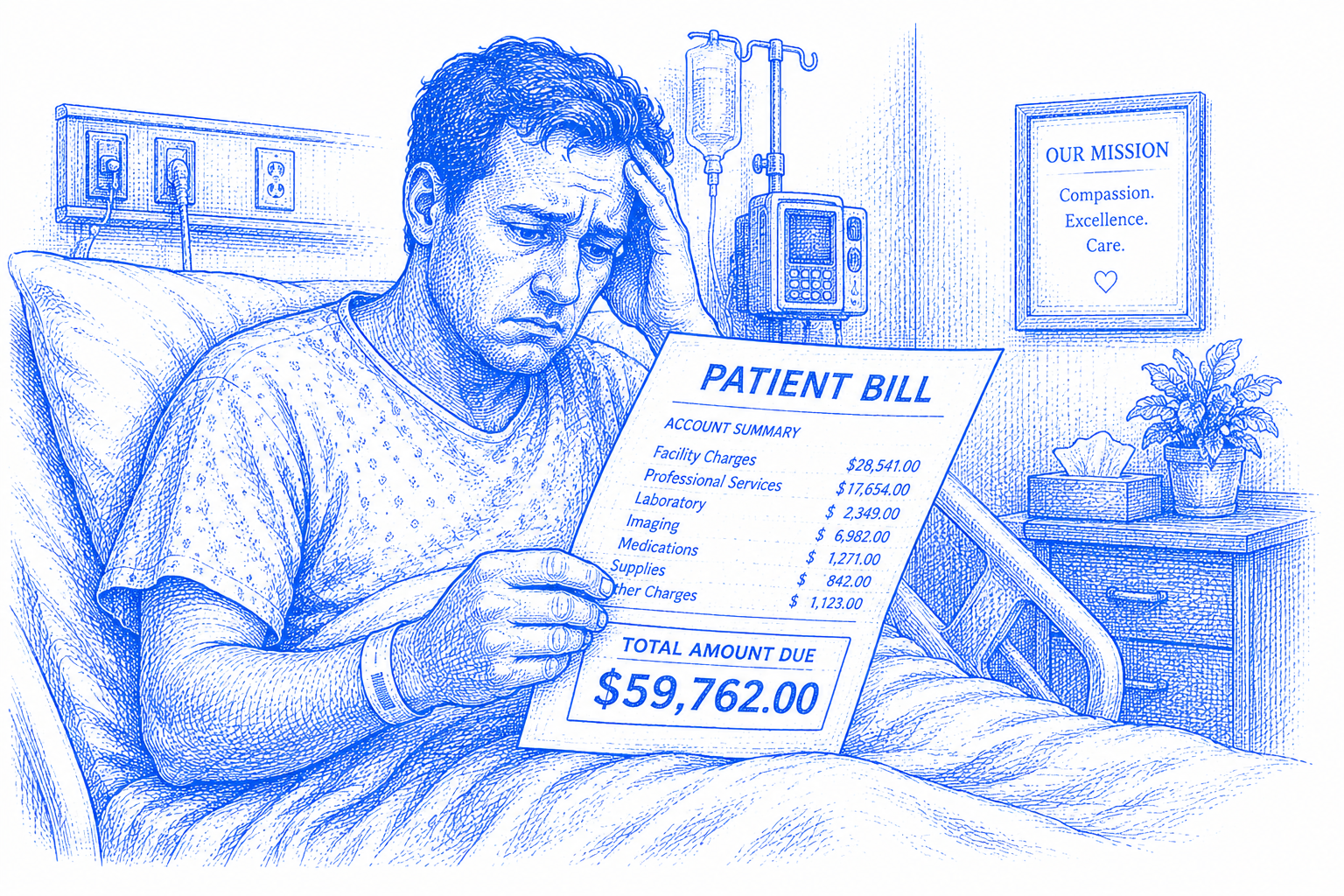
The patient experience doesn't end when the visit ends. It ends — or it ruptures — when the bill arrives.
Clinical teams can execute flawlessly: the care is competent, the visit is unhurried, the outcome is good. None of that insulates a practice from the consequences of a billing workflow that sends confusing statements, generates surprise balances, or makes payment feel like a bureaucratic maze. Patients notice. They remember. And they act accordingly.
Sixty-seven percent of consumers report confusion about their medical bills, and 87% say knowing their costs upfront matters to them. Nearly 45% have been unexpectedly billed for care they believed their insurance covered. These aren't abstract satisfaction metrics. They're leading indicators of delayed payments, patient churn, staff turnover, and regulatory exposure.
The financial cost of a poor billing experience lands across multiple dimensions simultaneously. Here's where it shows up.
Eroding Patient Satisfaction
Patient satisfaction scores are shaped by the full care encounter — including, disproportionately, the financial one. If the billing process were clearer, 43% of patients say they would pay their bills faster. And if digital wallet options were available, at least 27% say they would use them.
Outdated portals, inflexible payment schedules, and billing support that operates 9-to-5 against a patient population that opens mail at 6 PM — these are structural failures with measurable revenue consequences. Patients who delay payment rarely accelerate it. They disengage.
The downstream math is straightforward: lower collection rates, longer days in A/R, and higher cost to collect on balances that could have been resolved at time of service.
Walk-Outs Before the Visit Even Happens
Patient attrition doesn't only happen after the bill. It happens before the appointment.
A patient submits a web intake form, calls to schedule, or completes digital pre-registration — and never shows. The referral worked. The scheduling worked. The front-end process didn't. Early attrition of this kind traces back to friction in registration, financial clearance, and check-in.
The root causes are predictable. Eligibility verification that requires staff to hop payer portals and manually interpret 271 transactions creates lines and delays — and anxious patients. When a patient can't get a plain-language answer to "What will I owe?" before the visit, they hesitate. When cost opacity meets a high-deductible health plan and a tight budget, hesitation becomes a no-show. Deductibles are 47% higher today than they were a decade ago, and 50% of consumers have received a medical bill with a balance of $400 or more. The stakes for financial clarity are higher than they've ever been.
Brand Damage That Compounds Over Time
A patient's financial experience is a deciding factor in whether they return to that provider. And a poor one will drive roughly four out of every ten patients to leave a negative public review.
Negative reviews aggregate. They surface in Google searches, in health system directories, in word-of-mouth conversations. Practices that consistently frustrate patients on the financial side pay an acquisition tax — they spend more to attract new patients simply to offset the ones they're losing. The billing experience becomes a drag on growth.
Staff Burnout and Turnover
RCM departments are chronically short-staffed, and poor internal processes amplify industry-wide burnout. Revenue cycle specialists fielding routine billing questions — many of which could be handled by self-service or AI-powered support — lose time to low-value work that compounds resentment and fatigue.
Turnover in RCM is expensive. At a cost of up to 4x an employee's annual salary, losing one billing specialist earning $49,000 costs the organization up to $196,000 in recruiting, onboarding, and lost productivity. At typical RCM department turnover rates of 11–40%, a mid-sized organization can lose between $539,000 and $1.96 million per year from churn alone.
"While patients lack visibility into the financial and operational functions of healthcare, they most definitely feel pain when those areas of the business are suffering. Consequently, staffing shortages are hitting providers with a double whammy of lost revenue and decreased patient satisfaction." — Experian Health, Short-Staffed for the Long Term
Errors, Denials, and Revenue Leakage
Manual billing workflows produce errors. Errors produce denials. Denials that aren't reworked produce write-offs.
Self-pay after insurance accounted for nearly 60% of patient bad debt in 2021, up from 11% in 2018. That shift didn't slow down. Hospitals now collect more than 30% of their revenue directly from patients, and the number of balances exceeding $7,500 has grown significantly.
The mechanics of leakage are consistent: missed charges, payment posting errors, collections gaps on patient-responsibility balances, and failure to bill at time of service when the opportunity existed. Consider a regional hospital filing 130,000 claims per year with a 20% initial denial rate. Of those 26,000 denied claims, only 32% — about 8,320 — are resubmitted with corrected information. The remaining 17,680 claims, at an average of $2,030 each, represent $36 million in annual revenue that simply doesn't come back.
Patient Churn
The pattern is familiar to anyone who manages a revenue cycle. A paper statement arrives two to three weeks post-visit. The codes and totals don't match what the patient expected. The patient calls the number on the statement at 6 PM and reaches voicemail. They set the bill aside. The 30-day paper reminder cycle resumes. Another interruption. Another avoidance. Then collections.
That's the billing experience for a material share of patients at most practices — and it's the one that drives them elsewhere. Clinically, the visit may have been excellent. Operationally, the experience felt unpredictable and punitive.
Churn shows up in the financials as lower lifetime value, higher acquisition costs, longer days to first payment, and rising write-offs. For a regional hospital serving 17,500 patients annually, where 15% encounter billing problems and 20% of those patients leave as a result, the estimated lost lifetime value — at $63,000 per patient — reaches $33 million. If the billing issue rate rises to 20%, that figure climbs to $44 million.
Compliance and Legal Exposure
The worst billing experiences aren't just operationally costly. They're illegal.
The No Surprises Act created real enforcement teeth. HHS can impose civil penalties of up to $10,000 per violation — not per organization, but per encounter — for inconsistent cost estimates, stale eligibility data, or surprise bills that violate the statute. Providers and health insurers submitted nearly 1.2 million cases to the federal IDR portal in just the first half of 2025 — a 40% increase over the prior six-month period. The volume reflects the scope of the underlying compliance problem.
When billing failures cross from operational into legal territory — wrong balances sent to collections, patients effectively blocked from care, ignored record requests — the cost structure shifts entirely. Early settlement of a modest incident at a regional organization typically lands in the low-to-mid six figures after legal fees, remediation, refunds, and reputational triage. Litigation can run to high six or seven figures in defense costs alone, even when damages are small. A large-system failure involving regulatory oversight adds civil monetary penalties under HIPAA or state consumer protection law, mandated corrective action plans, and forced technology investment on a regulator's timeline — not yours.
From a CFO's perspective, the patient billing experience is a risk portfolio, not a back-office function. Underinvest in integrated systems and you carry exposure across regulatory penalties, class-action events, litigation spend, and long-term revenue erosion from lost patient trust. Invest in a modern, unified billing infrastructure and you shrink that exposure while improving the metrics your organization is already measured on.
The Cumulative Picture
A fictional but representative regional hospital — $300 million gross revenue, 25 RCM staff, a dated billing system — puts the math in concrete terms:
- $1.2 million in direct self-pay revenue at risk from poor billing friction (12% of $10M profit from patient collections)
- $33–44 million in estimated patient lifetime value at risk from billing-related churn
- $36 million per year in denied claims that are never reworked
- $539,000 to $1.96 million in annual RCM staff turnover costs
- Legal and compliance costs that scale from six figures to eight depending on the severity and duration of the underlying failures
These numbers don't require catastrophe to materialize. They accumulate quietly across everyday process failures: stale eligibility data, delayed statements, manual posting errors, inadequate self-service options.
FAQ
What makes a patient billing experience "poor"?
Patients consistently flag several failure modes: unclear or unexpected statements, multiple bills for a single encounter, no upfront cost estimate, payment portals that aren't mobile-friendly, and billing support that's hard to reach. Any one of these creates friction. Together, they produce the delayed payment and patient churn patterns that show up in A/R and collection rates.
How does billing experience affect patient retention?
Research shows roughly 40% of patients who have a poor financial experience will leave a negative review, and a significant share will switch providers. At an average patient lifetime value of $63,000, even modest churn rates translate into tens of millions in lost revenue for mid-sized health systems.
What compliance risks come from billing errors?
Under the No Surprises Act, HHS can impose civil penalties of up to $10,000 per encounter for violations including inconsistent cost estimates and illegal surprise bills. Patterns of billing errors can also trigger HIPAA civil monetary penalties, state consumer protection enforcement, and class-action exposure.
How does staff turnover connect to billing quality?
Short-staffed RCM teams operating manual, error-prone workflows experience higher burnout and turnover. Replacing one RCM specialist can cost up to 4x their annual salary. At typical department turnover rates, this compounds into $500,000 to nearly $2 million in annual costs for a single mid-sized facility.
What should RCM leaders prioritize to fix the billing experience?
The highest-leverage interventions happen at the front end: accurate eligibility verification before the visit, upfront patient cost estimates, and point-of-service collection options. These reduce the volume of post-visit billing friction, shrink bad debt, and lower cost to collect — without requiring more staff.
What Better Looks Like
The organizations closing the gap on billing experience aren't doing more of the same — they're replacing manual workflows with integrated, AI-powered infrastructure that handles eligibility verification, cost estimation, claims submission, payment posting, and patient communication in a single connected system.
ENTER gives healthcare organizations exactly that: an end-to-end revenue cycle platform built on HL7/FHIR infrastructure, with native EHR integration and AI-driven automation across every stage from pre-authorization through final payment. The result is fewer denials, faster collection, lower cost-to-collect, and a patient financial experience that doesn't undermine the clinical one.
See how ENTER can close the revenue gap at your organization: enter.health
Results
Sources
About the Author


ENTER is HIPAA compliant and SOC 2 Type 2 certified. See our trust center to learn more.