Talk to Sales
Clinical Denial Appeals That Actually Win: A Framework for Revenue Recovery in 2026
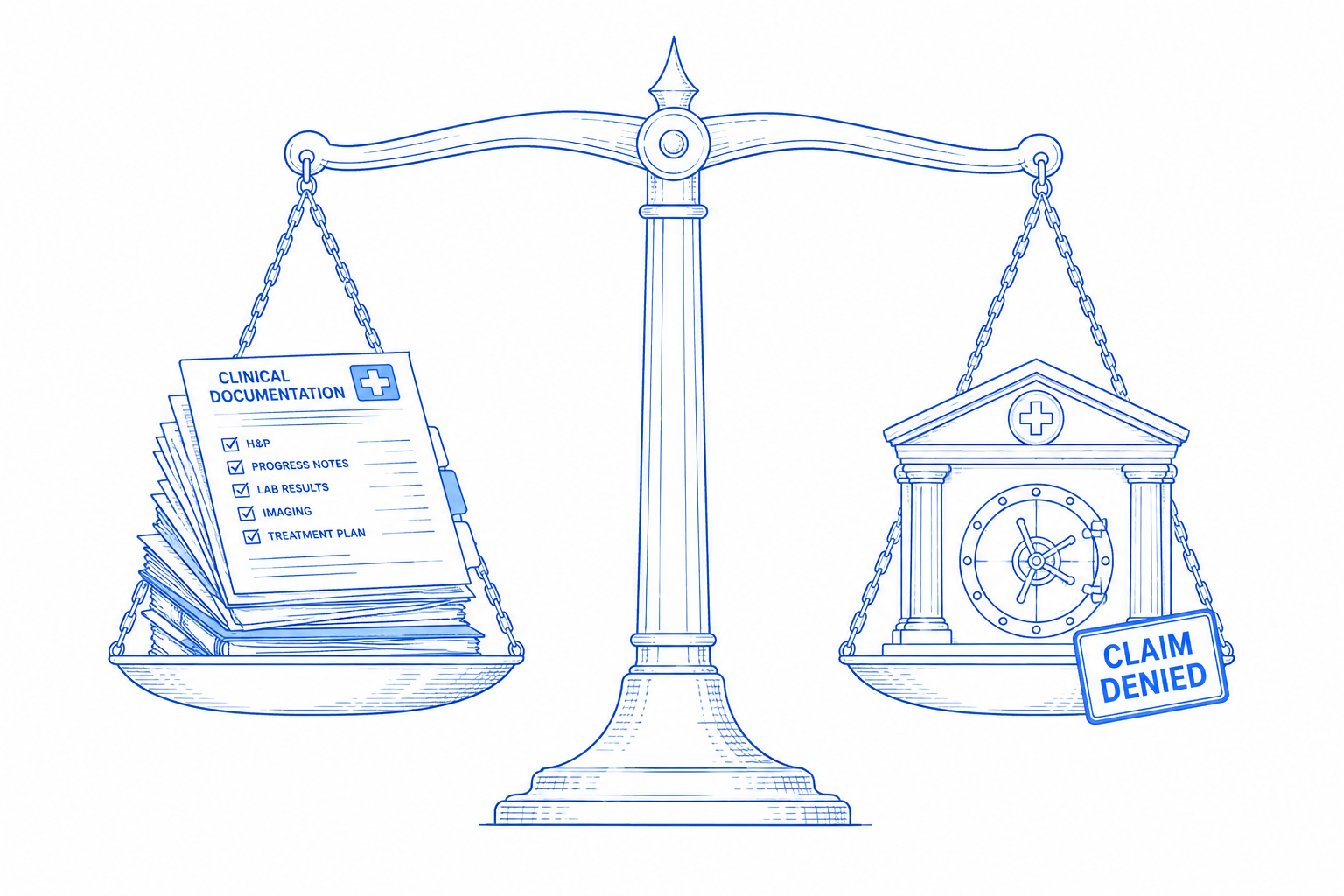
Clinical denials are accelerating. Initial denial rates hit 11.8% in 2024, up from 10.2% just two years prior — and denials from Medicare Advantage plans spiked 4.8% from 2023 to 2024 alone. The administrative cost to rework each one keeps climbing: reworking a Medicare Advantage denial now costs an average of $47.77, and a commercial denial $63.76. At scale, that math becomes brutal. Os-healthcareHealthcare Financial Management Association
Prevention is the right strategic goal. But prevention alone doesn't close the gap. Fewer than 1% of denied medical claims are ever appealed — despite 44% of internal appeals succeeding. That gap between what's recoverable and what's actually recovered is where revenue cycle programs bleed out. A well-run appeals operation doesn't just recover denied revenue. It reveals where upstream workflows are failing — and gives organizations the clinical and operational data to fix them. Muni
Why Clinical Denials Keep Getting Denied
Payers deny for reasons that aren't always about clinical appropriateness. Documentation gaps, medical necessity interpretation differences, and patient status disputes — observation versus inpatient — drive the majority of clinical denial volume. The issue compounds when organizations treat each denial in isolation: work the claim, submit the appeal, move on. That reactive posture means the same documentation gaps produce the same denials, month after month.
The organizations that consistently win on appeals treat the appeal letter as evidence, not argument. They build cases the same way a clinician builds a differential diagnosis — from objective findings, documented comorbidities, failed lower-level interventions, and direct reference to the criteria payers use. That requires clinical depth from the start, not retrofitted justification after the denial arrives.
Building an Appeal That Wins
A structured, evidence-based framework ensures appeals are clear, compelling, and aligned with payer criteria. Every strong appeal letter contains five elements.
Introduction: State the denial reason and request reconsideration explicitly
Background: Summarize the patient's clinical presentation and course of care
Rebuttal: Provide objective clinical evidence, reference InterQual or MCG criteria, use payer-specific language
Conclusion: Restate the request concisely — no new arguments
Supporting Documentation: Attach all relevant records, physician notes, and the original denial letter
The rebuttal section is where most appeals fail. Generic language doesn't move payer medical directors. Payer-specific terminology does. If the denial cites MCG criteria, the rebuttal needs to address MCG criteria — point by point, with documentation that maps directly to the contested elements. If the payer flagged observation versus inpatient, the appeal needs to demonstrate why outpatient care was clinically inappropriate, what adverse outcomes were at risk, and what lower-level interventions had already failed.
Physician advisor (PA) involvement is the variable that moves the needle most on complex denials. For inpatient level-of-care disputes or high-cost procedures, a peer-level clinical review isn't just persuasive — it's often the difference between reversal and write-off. PAs add clinical authority that appeals written solely by billing staff can't replicate.
CDI Doesn't Support Appeals. It Enables Them.
Clinical documentation integrity (CDI) teams are often described as a prevention tool. They are — but their work also determines how much an appeals team has to work with after a denial.
When CDI specialists are engaged during the patient encounter — clarifying diagnoses, capturing severity of illness, documenting the full complexity of care — the medical record itself becomes the strongest possible appeal. It doesn't require reconstruction. It doesn't require guesswork about clinical intent. A record that already demonstrates medical necessity through clear indicators is far easier to defend than one where that justification has to be assembled after the fact.
The practical implication: organizations that treat CDI as strictly a coding-accuracy function are leaving appeal recoveries on the table. CDI's real-time query support, properly executed, means that when a payer's utilization review tool flags a claim, the documentation is already there to challenge it.
Turning Appeals Data Into a Prevention Engine
Appeals data is intelligence, not just backlog. Analyzed systematically, denial patterns expose the upstream failures driving repeated losses.
Repeated observation-versus-inpatient denials from a specific payer signal a utilization review protocol problem — not a one-off documentation miss. Frequent documentation-related denials from a particular service line point toward CDI education gaps or physician query processes that aren't working. When appeals outcomes feed back into UR workflows and CDI training, organizations stop relitigating the same claims and start preventing them.
According to MGMA's 2024 benchmarking report on denials and appeals, more than half of U.S. healthcare organizations report denial rates exceeding 10%, with appeals among the most resource-intensive revenue cycle functions. Organizations that break the reactive cycle — appeals for the sake of appeals, with no loop back to prevention — carry that cost indefinitely. Healthcare Financial Management Association
The structural fix is cross-functional: a denial prevention and management committee where utilization review, CDI, finance, and revenue cycle leadership meet around shared data on a regular cadence. When UR doesn't know what the revenue cycle is seeing from payers, the two functions can't coordinate. When CDI doesn't know which documentation gaps are generating denials, education stays generic. The committee closes those information loops.
What High-Performing Programs Look Like
The practices that consistently protect revenue against clinical denials share a specific set of structural commitments:
Standardized appeal templates and documentation checklists. Consistency matters more than perfection. Templates ensure every appeal includes the clinical evidence payers expect, regardless of who writes the letter. Checklists prevent the common misses — missing physician notes, undocumented comorbidities, unattached denial letters — that turn winnable appeals into lost revenue.
UR nurses embedded in the emergency department. Status assignment errors made at admission compound throughout the revenue cycle. Embedding UR review at the point of admission — rather than retrospectively — catches observation-versus-inpatient misassignments before they become denials.
Escalation protocols for borderline cases. Not every status decision needs a PA. But borderline cases involving high-cost procedures, complex comorbidities, or payers with known aggressive review patterns should hit PA review before the claim goes out. The cost of PA time is a fraction of the cost of a lost appeal on a high-dollar claim.
KPI discipline. Denial-to-resolution time, appeal success rate by payer, and revenue impact by denial category are the metrics that matter. Without them, programs operate on intuition rather than data — and can't identify which intervention is actually moving the numbers.
The Technology Question
Predictive modeling has real value in clinical denial management. It can identify payer patterns that signal elevated denial risk before claims are submitted — giving UR and CDI teams the opportunity to intervene upstream rather than appealing downstream. Automated claim-scrubbing and predictive validation can prevent up to 85% of avoidable denials, according to Deloitte's 2024 Healthcare Revenue Cycle Reinvention report (Healthcare Financial Management Association).
But technology without clinical oversight produces a different problem. Automated systems flag; humans decide. The organizations that perform best combine analytics with expert clinical review — using technology to surface the right cases for human attention, not to replace the clinical judgment that makes appeals credible to payer medical directors.
Key Takeaways
- Clinical denial rates reached 11.8% in 2024 and continue to rise. Appeals that consistently win are built on structured, evidence-based frameworks — not reactive claim chasing.
- Physician advisor involvement on complex inpatient level-of-care disputes is the single highest-leverage variable in appeal success.
- CDI's real-time documentation work determines how much an appeals team has to work with. Treat CDI as an appeals infrastructure investment, not just a coding-accuracy function.
- Appeals data reveals upstream failures. Organizations that route denial patterns back to UR and CDI workflows break the reactive cycle.
- Cross-functional committee structures — UR, CDI, finance, and revenue cycle aligned around shared data — are what separate high-performing programs from organizations perpetually behind on their denial queues.
Denial management is one of the most measurable, improvable functions in the revenue cycle — and one of the most neglected. ENTER's platform connects eligibility verification, prior authorization, and claims intelligence in a single workflow, giving teams the data they need to prevent denials upstream and move decisively when appeals are necessary. See how it works at enter.health.

